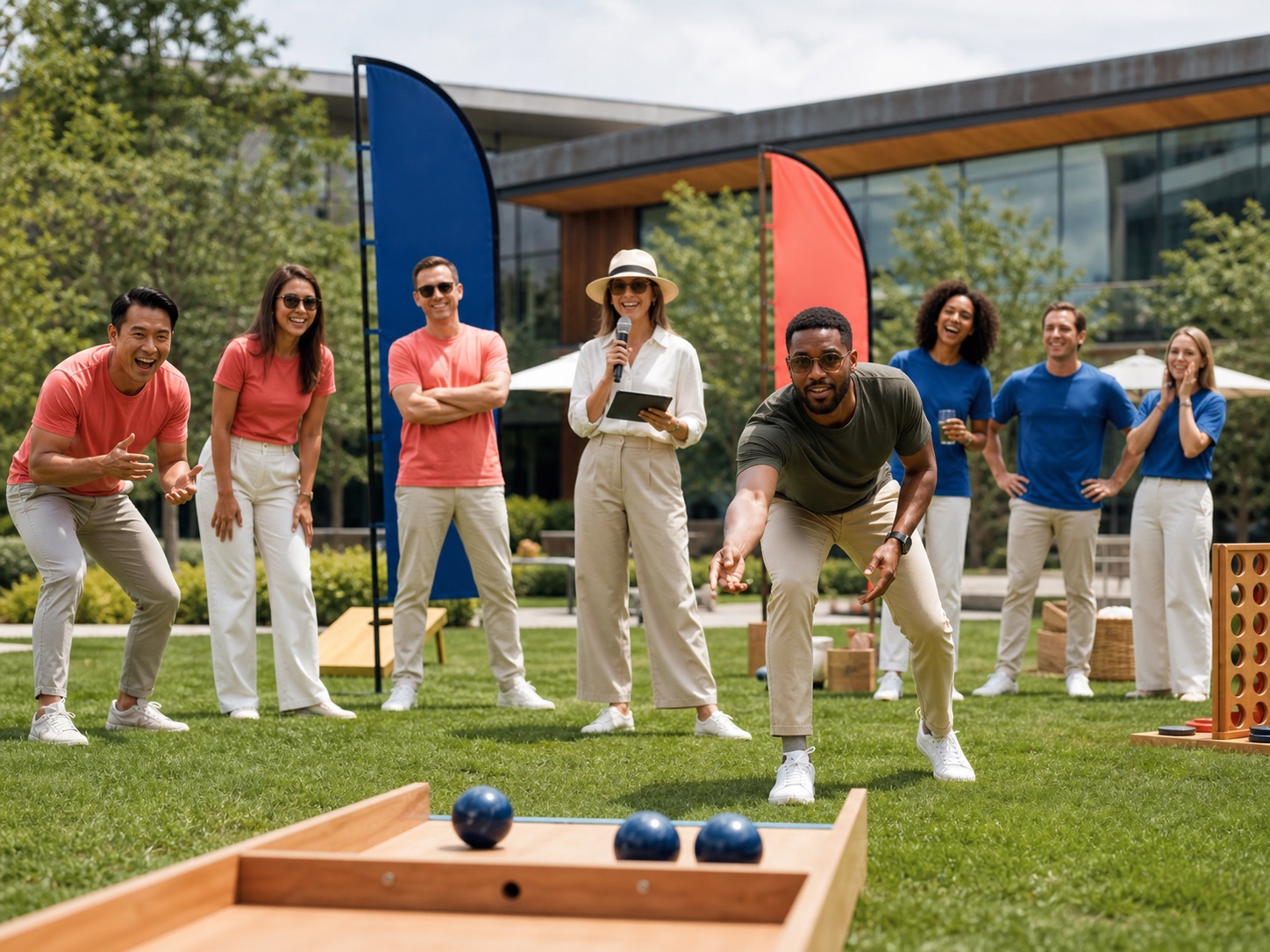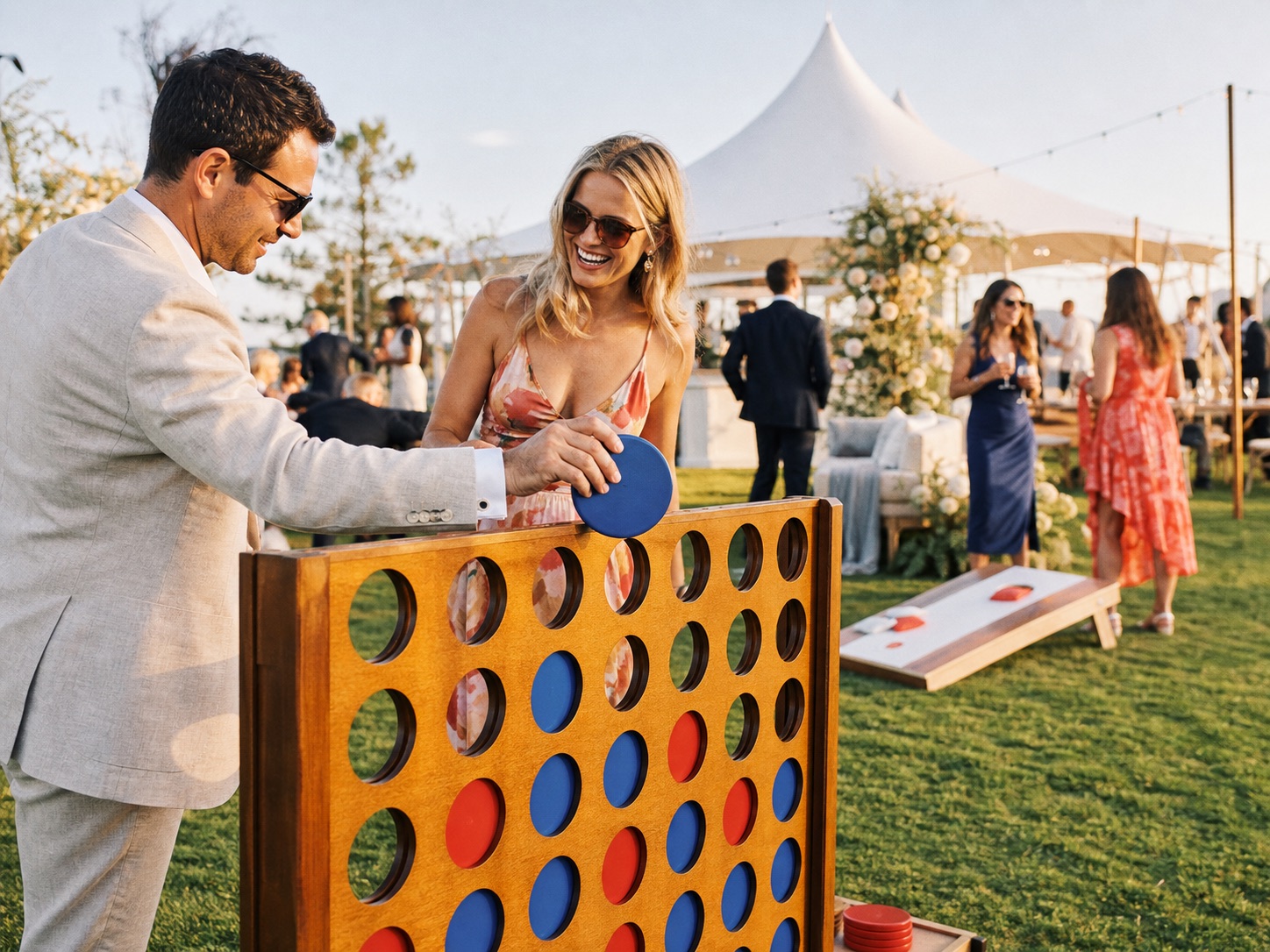
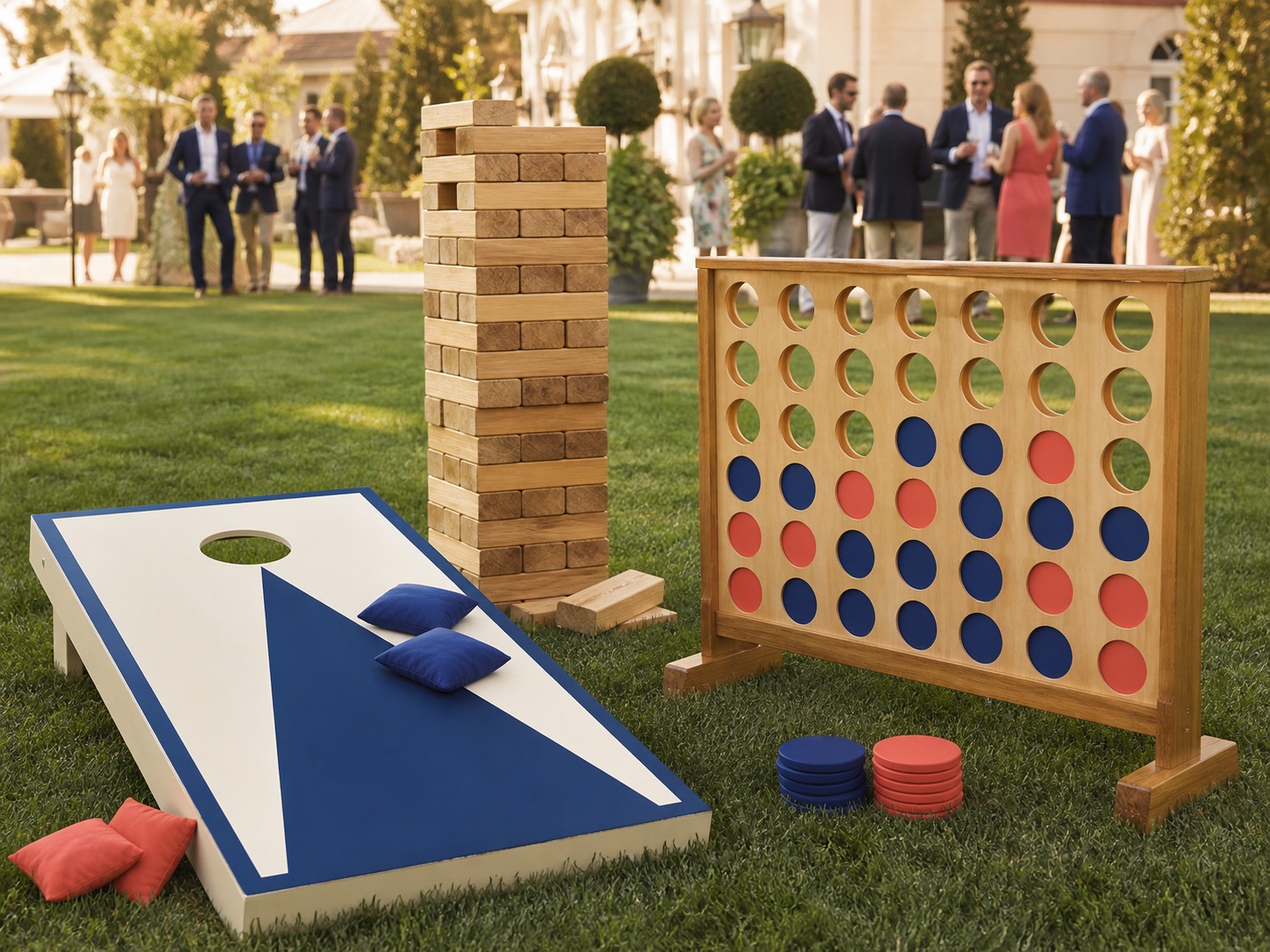
The best yard games do more than fill an empty corner. They give early arrivals something to do, help strangers start talking, and keep the party moving when the schedule slows down. The trick is choosing games people recognize, can join quickly, and will happily play more than once.
This list works for backyard birthdays, wedding cocktail hours, graduation parties, family reunions, and company events. You do not need all eleven. For most events, three to five well-chosen games create more energy than a crowded field of equipment.
The best yard games for almost any party
1. Cornhole
Cornhole is the anchor game. Most guests already know how it works, rounds can be casual or competitive, and two people can play while a larger group watches. It also works for mixed ages and does not require constant supervision.
Plan for a lane about 35 feet long if you want regulation-style play. For a casual party, the boards can move closer together. Keep the throwing lane away from doors, buffet lines, and seated guests.
2. Giant tumbling tower
A giant tumbling tower creates its own audience. The rules take seconds to understand, and every move becomes more entertaining as the tower grows. It is a particularly good cocktail-hour game because guests can step in for one turn without committing to a full match.
Place it on hard, level ground. A patio, indoor floor, or very even lawn works better than a slope. Give the tower a clear fall zone and keep drinks off the game table.
3. Giant four-in-a-row
Four-in-a-row is colorful, familiar, and easy for children and adults to play together. Games move quickly, which prevents one pair from monopolizing the setup. It is also one of the most visually recognizable pieces in event photos.
4. Putterball
Putterball combines the satisfying challenge of mini golf with the social structure of a party game. It works especially well for adult birthdays, brewery events, golf-themed parties, and company gatherings.
It needs a flat surface and a little more concentration than a tossing game, so position it outside the loudest part of the event.
5. Ladder toss
Ladder toss is portable, quick to learn, and good for guests who want friendly competition without a high skill barrier. The bolas need room to travel, so create a defined throwing side and avoid placing it near walkways.
6. Bocce
Bocce rewards finesse instead of power. That makes it a useful counterpoint to larger, louder games. It is best on a long patch of grass or another surface where the balls can roll consistently.
7. Ring toss
Ring toss is compact and works well for younger guests or smaller spaces. It is best used as part of a larger mix rather than the main attraction.
8. Yard dice
Oversized dice can support several games and add a playful visual element. They are easy to move and require little space, which makes them a good backup game near lounge seating.
9. KanJam
KanJam brings more movement to the field. It is a strong choice for active crowds, school events, and casual company picnics. Because discs can travel, it needs a larger buffer than cornhole or a tumbling tower.
10. Giant checkers
Giant checkers gives quieter guests a place to settle in. It is easy to understand, visually clean, and useful when your game area includes a mix of active and low-key stations.
11. Bucket ball
Bucket ball is high-energy and instantly recognizable. It suits college events, birthdays, and casual team competitions. For a formal wedding, it can feel out of place unless the design and materials match the rest of the event.
How many yard games do you need?
A practical starting point is one game for every 25 to 35 guests who will be in the activity area at the same time. That does not mean a 150-person wedding needs six games for the entire reception. If games are primarily for a 60-minute cocktail hour, four or five strong stations are usually enough to create movement without taking over the venue.
Use the guest count as a guide, then adjust for these factors:
- Choose more games when the activity is the main entertainment, guests arrive in waves, or you want a structured tournament.
- Choose fewer games when the band, bar, food, and photo booth are competing for attention.
- Favor quick-turn games for a large crowd. Cornhole and four-in-a-row move people through faster than a long bocce match.
- Mix energy levels. Pair active tossing games with one slower strategy game so every guest has an inviting option.
A good game lineup gives guests choices. A great layout makes those choices obvious.
Plan the space before choosing the games
Start with the venue, not the wish list. Photograph the intended area, estimate its dimensions, and look for slopes, irrigation heads, low branches, foot traffic, and nearby glass. Ask the venue whether lawn stakes, outdoor equipment, and indoor backup setups are allowed.
Group two or three social games close enough to feel lively, but leave clear lanes between them. Keep throwing directions consistent so guests are not crossing in front of one another. For evening events, confirm that the game area will be lit after sunset.
If rain is possible, identify which games can move indoors and where they will go. A wedding lawn game plan should include that backup before the event day.
Renting versus buying yard games
Buying can make sense when you want one game for repeated family use. Renting makes more sense when you need several large games for one date, have limited transport or storage, or want the setup to look consistent in a polished event space.
A full-service rental should spell out what is included: delivery area, setup, pickup, rental window, surface requirements, and any damage terms. Popstar packages include delivery, styled setup, instructions, and pickup, so hosts do not spend the morning hauling giant pieces across town.
Ready to choose a mix? See our premium lawn game rental packages or check your event date.