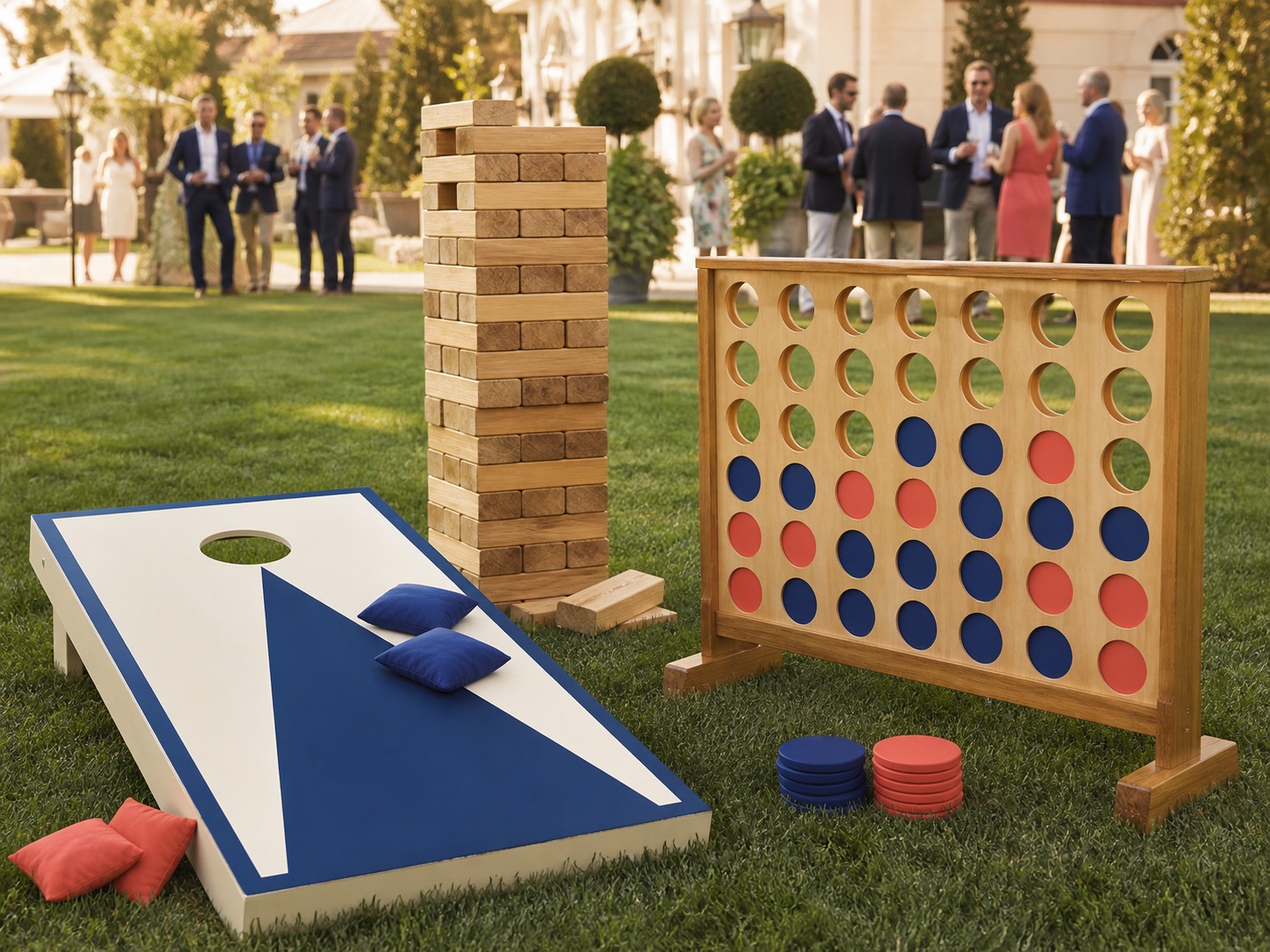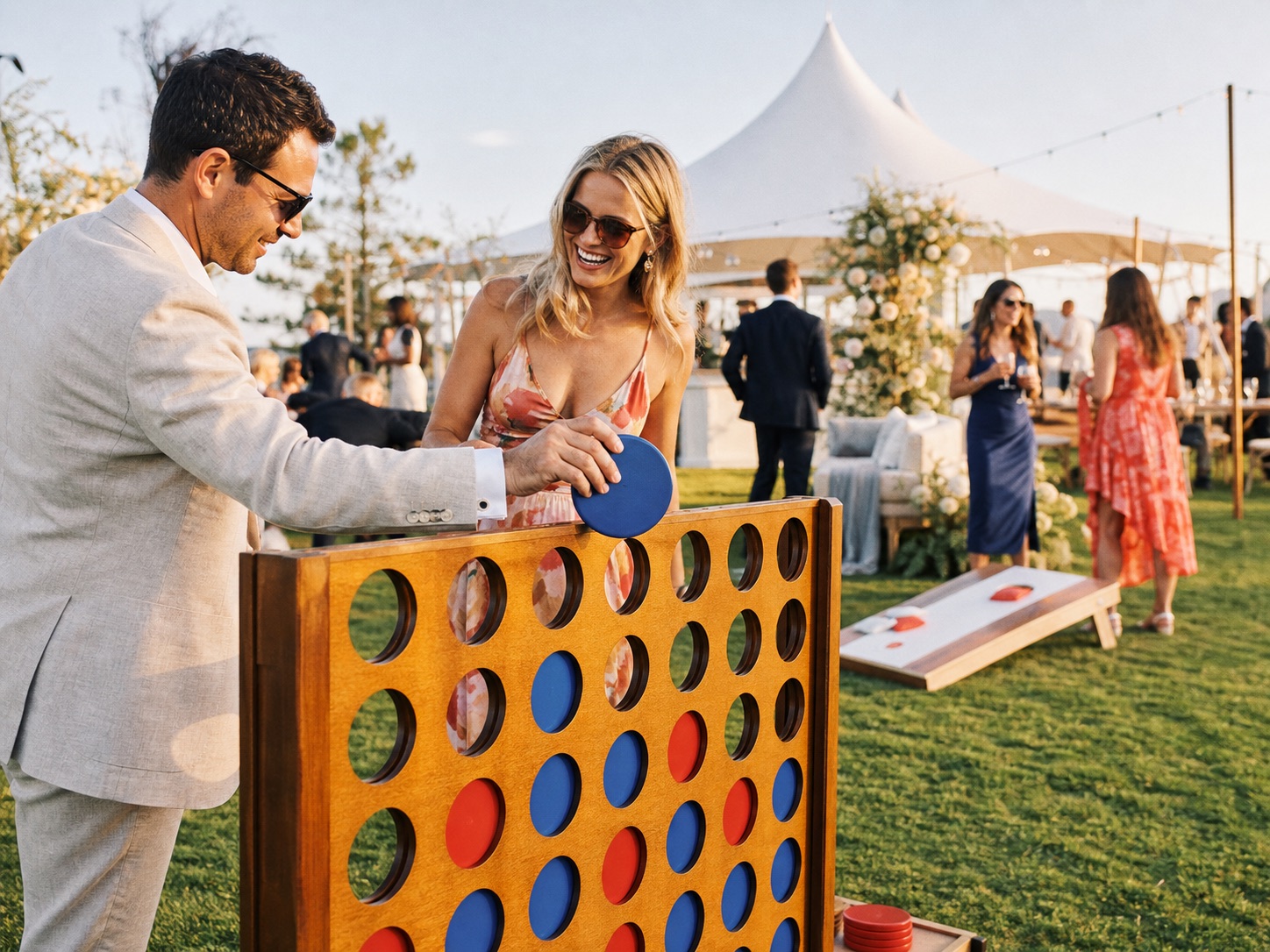
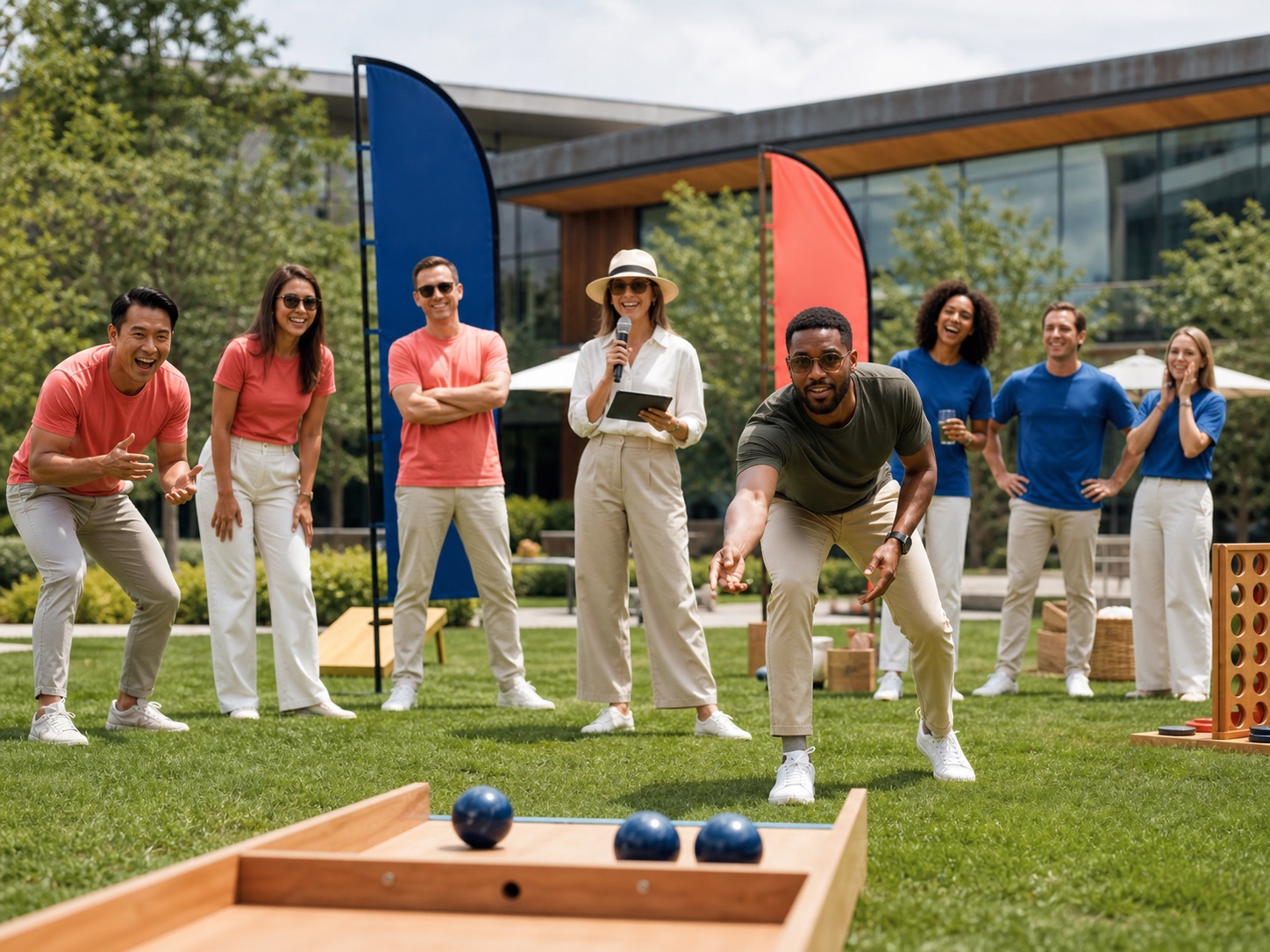
Corporate event lawn games can create exactly what planners want: coworkers talking outside their usual circles, a little shared energy, and an activity that does not require athletic talent. They can also become a slow afternoon of complicated rules and reluctant participation.
The difference is not the novelty of the games. It is the format.
Choose the event mode first
Before choosing equipment, decide which of these experiences you are planning.
Open play
Guests move among games whenever they want. This works well for company picnics, family days, client receptions, and events where food and conversation remain the main attraction. Use familiar games, simple signs, and enough space for people to watch without blocking play.
Casual tournament
Teams earn points across several stations, but the schedule stays flexible. This creates more participation than open play without turning the day into a serious competition. It works well for departments that already know one another and groups with a broad mix of ages and abilities.
Hosted field day
A host explains the format, starts rotations, tracks scores, and keeps the energy moving. This is the right choice when games are a main item on the agenda or when the planner cannot manage the activity while handling the rest of the event.
Hosted events cost more because they include planning and labor in addition to equipment. Our Field Day package starts at $1,495 for 8–12 stations, up to 100 guests, and a two-hour hosted tournament. Larger groups, longer programs, and multi-host formats receive a custom scope.
Pick inclusive games
The best corporate games are quick to learn and forgiving enough that a first-time player can contribute. A balanced lineup might include:
- Cornhole for familiar head-to-head competition
- Giant four-in-a-row for fast strategy rounds
- A tumbling tower for suspense and team communication
- Putterball for precision
- Ring toss or ladder toss for short scoring rounds
- Giant checkers for a quieter station
- A cooperative relay that rewards coordination rather than speed alone
Avoid building the entire program around strength, running, or throwing accuracy. Give teams more than one way to earn points, and make observation feel welcome. People participate more readily when “playing” does not mean performing in front of the whole company.
Size the setup for the group
For open play, one station for every 25 to 35 guests is a reasonable starting point. For a hosted tournament, the rotation matters more. Teams should be small enough that each person gets a turn and stations should have similar round lengths.
For example, 80 guests can become eight teams of ten rotating through eight stations. If only one person can play at a time, the station needs short turns or parallel equipment. Otherwise, most of each team will spend the afternoon waiting.
Ask the host to provide a run of show that covers team assignments, round length, transition time, scoring, ties, and the final announcement. A pile of games is not a program.
If participation is mandatory, the experience should feel optional once guests arrive: several ways to contribute, no public embarrassment, and room to take a break.
Use branding where it helps
Company colors, team signs, and a central scoreboard can make the field feel like a real event. Branding is most effective when it helps guests navigate. It becomes clutter when every beanbag, rule card, and game surface carries a different message.
Prioritize these elements:
- A welcome or schedule sign
- Clearly numbered stations
- Team identifiers that are easy to spot
- One scoreboard or results display
- A photo-friendly awards area
If the event supports a campaign or product launch, share brand files and approval deadlines early. Physical signage needs more lead time than a slide deck.
Account for setup and staffing
Eight to twelve large games take meaningful vehicle space, setup time, and teardown labor. The event site may also have loading restrictions, elevators, long carries, security check-in, or limited access windows.
Before requesting a quote, gather:
- Event address and exact activity location
- Guest count and approximate team count
- Indoor and outdoor surface details
- Loading and parking instructions
- Setup-complete and pickup times
- Power availability, if any station needs it
- Weather backup location
- Insurance or vendor paperwork requirements
Providing those details makes a quote more accurate and reduces expensive surprises on event day.
Build a field day people will remember
The best closing moment is short. Announce the winning team, share one or two playful awards, take the group photo, and move on while the energy is high. Avoid a long scoring audit or a prize structure that makes a casual event suddenly feel high-stakes.
For a smaller company happy hour, a self-directed five-game setup may be enough. Compare the Celebration Set and hosted Field Day on our rental packages. If you are still choosing individual games, start with our guide to yard games guests actually play.
Planning a company event in the Triangle? Tell us the date, location, and guest count, and we will recommend open play or a hosted format.